
Home / By room / Bathrooms & Mirrors
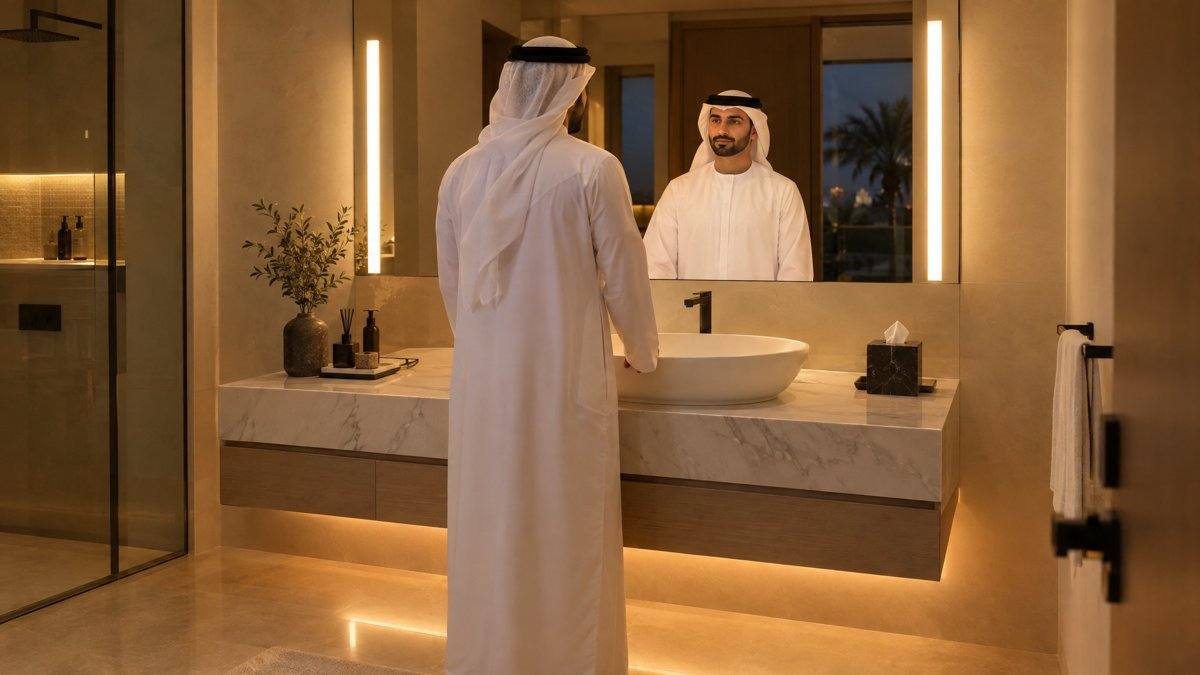
Bathrooms & Mirrors lighting: The complete guide
In the bathroom, beauty meets safety. The light should show the face without shadows, and the fittings must withstand steam and water according to how close they are to it.
Recommended values
Guide values; the final design depends on the space, its colours and its use.
The most common mistake: a spotlight above the mirror
A narrow ceiling spotlight above the basin or behind the head of the person standing there casts strong shadows under the eyes, nose and chin, and the shadows get worse when you raise your hand to shave or apply make-up. A spotlight behind the head puts your face in your own body’s shadow. A human face needs light coming from the front and both sides.
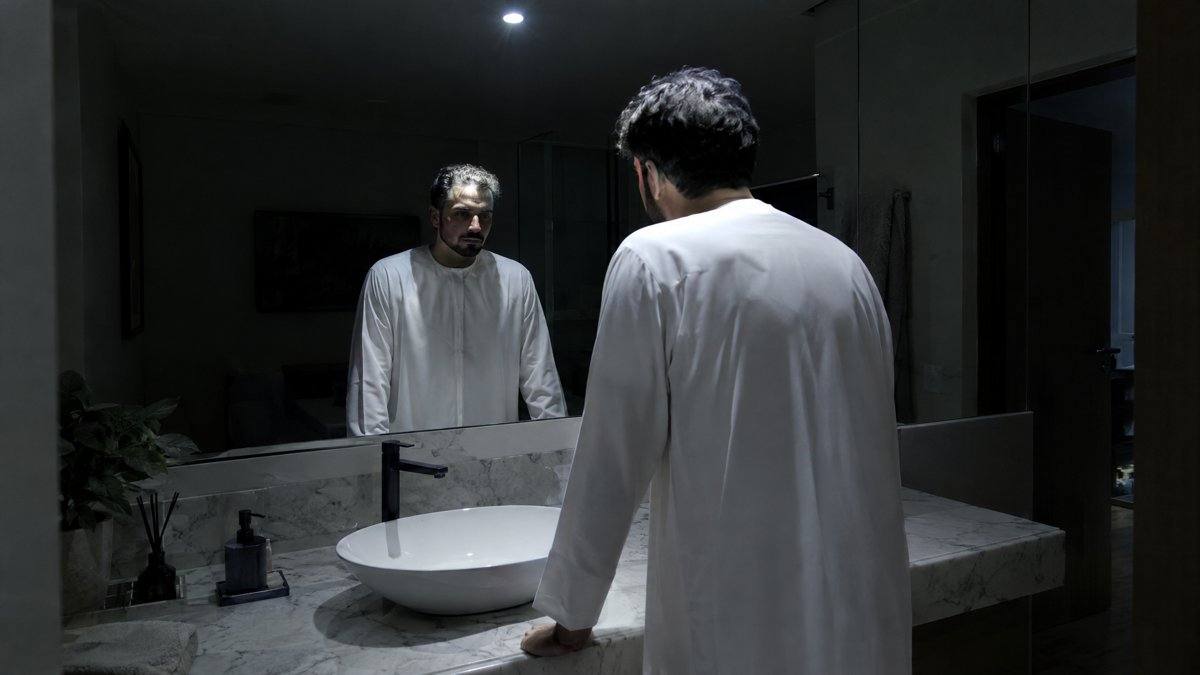
Lighting the mirror the right way
- Lighting on both sides of the mirror, at roughly face level: the best way to get a shadow-free face.
- Backlit mirror lighting combined with front lighting: the backlight gives beauty and depth, and the front light gives clarity.
- A fitting above the mirror with diffused light directed forwards, not a narrow spotlight pointing down.
- If a ceiling spotlight is unavoidable, it should be in front of the person standing, not behind them, aimed at the face or the basin at a considered angle, and complemented by side lighting.
- CRI 90 or higher and 3000K – 4000K so skin tones appear true to life.
Cross illumination: the international standard
Designers in America and Europe call lighting a mirror from both sides “cross illumination” (Cross Illumination) and consider it the gold standard, because the light wraps the face from both sides and eliminates shadows under the eyes and nose. Overhead light alone lights the forehead, leaves the rest of the face in shadow and makes a person look older.
| Measurement | Approximate value |
|---|---|
| Height of the centre of the side fitting above the floor | 150 – 165 cm (eye level) |
| Fitting above the mirror | 15 – 20 cm above the top edge of the mirror, or about 190 – 203 cm from the floor |
| Double basins | Three fittings: one between the two mirrors and one at each end |
| Night lighting | A strip under the lower cabinet (Toe-kick) near the floor |
Layers in the bathroom
| Layer | Example | Purpose |
|---|---|---|
| Mirror lighting | Side or backlit | Seeing the face |
| General lighting | Spotlight or concealed indirect light | Movement and cleaning |
| Concealed lighting | Under a floating vanity or shelf | Visual lightness and night lighting |
| Accent lighting | On an artwork, marble wall or bathtub | Beauty |
| Night lighting | Low wall fitting near the floor | Entering at night without glare |
Bathroom zones and protection
The international standard IEC 60364-7-701 divides the bathroom into zones according to proximity to water, and the electrical engineer relies on it when selecting fittings:
| Zone | Where | Minimum protection |
|---|---|---|
| Zone 0 | Inside the bathtub or the shower floor | IP67, and safety extra-low voltage (SELV) up to 12 V |
| Zone 1 | Above the bathtub or shower up to a height of 2.25 m | At least IP44, and IPX5 if water jets are used for cleaning |
| Zone 2 | 60 cm around Zone 1, and around the basin | At least IP44 |
| Outside the zones | The rest of the bathroom | IP20, and IP65 if cleaned with water jets |
- The circuit supplying the bathroom is protected by a residual current device (RCD) with 30 mA sensitivity.
- Don’t use 220 V strips without a Driver in the bathroom or anywhere they can be touched; use low-voltage strips with a suitable, insulated Driver.
- The final decision rests with the electrical engineer, in line with the code adopted in your country.
Ideas that make the difference
- Concealed indirect lighting on the wall opposite the mirror: it lights the face with soft reflected light.
- A concealed strip under a floating vanity or shelf: it makes it look as if it’s floating, and doubles as night lighting.
- A narrow-beam spotlight on the basin itself to bring out the stone and the tap, separate from the face lighting.
- Low-voltage, waterproof floor lighting at the corners of the bathtub.
- Dressing-room lighting with a high CRI and light that washes the shelves from the front.
Guest washrooms
A guest washroom is an opportunity for decorative lighting: two pendants on either side of the mirror, a backlit mirror, or accent lighting on a stone wall or artwork. The rule is the same: the face first, then the beauty.
How to build the layers
- Light the mirror from both sides or from behind (Backlit) instead of an overhead spot that casts shadows under the eyes.
- A water-resistant spotlight above the shower area.
- Cove lighting or a strip beneath a wall-hung vanity for a sense of lightness and a night light.
- Avoid aiming light directly at the mirror or glass so it doesn’t bounce back into your eyes.
Common mistakes: Bathroom
Common mistakeFace shadows in the bathroom
“Standing at the bathroom mirror and seeing dark circles under your eyes? It's not tiredness, it's your lighting!”
- The problem
- Placing a spotlight directly overhead at the bathroom mirror creates harsh shadows that make shaving or applying make-up difficult.
- Technical explanation
- Use diffused wall lighting (Wall Sconce) on both sides of the mirror or above it to prevent harsh shadows.
- The result
- Everyday comfort for the client and clear vision without annoying shadows.
Common mistakeDotted light (Dots) on shelves
“You made luxurious marble shelves, and the strip's reflection shows up as dots? There goes the luxury!”
- The problem
- Installing a standard LED strip above glossy surfaces (marble or mirrors), which reflects the LED dots and looks cheap.
- Technical explanation
- Glossy surfaces need either a dot-free strip (COB LED) or an aluminium profile with a Diffuser that hides the dots completely.
- The result
- A smooth, continuous line of light that feels refined and luxurious.
Common mistakeAiming light at glass and mirrors
“Got a spotlight hitting the windows at night? You're blinding your guests!”
- The problem
- Aiming lights at reflective surfaces such as glass creates distracting glare that blocks the view outside.
- Technical explanation
- Light should be aimed at walkways and opaque walls. Avoid aiming lights at windows at night entirely, so you can enjoy the view of the garden.
- The result
- A comfortable evening sitting and a clear view of the villa's garden without distraction.
Common mistakeLighting windows and mirrors
“Lighting your mirrors and windows to make your home look luxurious? You're blinding yourself!”
- The problem
- Aiming lights directly at glass and mirrors bounces the light back as very uncomfortable glare.
- Technical explanation
- Glass doesn't reflect light softly like painted walls do, so lighting should be from the side or hidden behind the mirror (Backlit) to avoid discomfort.
- The result
- Hotel-style bathrooms and corridors, without visual discomfort.
Common mistakeThe four bathroom Zones
“Electrically, a bathroom isn’t one area... it’s 4 zones! Getting this wrong causes short circuits.”
- The problem
- Installing non-sealed (IP20) fixtures in direct shower areas
- Technical explanation
- In engineering terms the bathroom is divided into 4 zones (Zone 0 for the tub, Zone 1 above the shower which needs IP44/IP65, and Zone 3 for dry areas)
- The result
- Protecting your family from electric shock, and choosing fixtures that last a long time without rusting
Common mistakeDirect lighting in dressing rooms
“Your clothes look one colour in the wardrobe and another once you step outside?”
- The problem
- Using low-CRI lights and placing the light behind the person
- Technical explanation
- Dressing rooms need CRI 95 or above, with directional lighting inside the wardrobes or between the person and the mirror to avoid shadows and false colours
- The result
- Perfect elegance and choosing the right colours for your clothes every day
Common mistakeLighting glass windows
“Have lights aimed at your living room windows? You've just blinded your guests!”
- The problem
- Aiming light at glass makes it act like a mirror, reflecting harsh light into the eyes and blocking the view of the garden.
- Technical explanation
- Light should be directed at walkways and solid walls (Wall Washer), completely avoiding reflective surfaces.
- The result
- A comfortable living room at night with a clear view of the garden.
Common mistakeBuying IP20 lights for the bathroom
“Putting an ordinary spotlight in the shower ceiling and wondering why it gives shocks?”
- The problem
- Using non-sealed fittings in Zone 1, which is exposed to steam and water.
- Technical explanation
- The area directly above the shower needs fittings rated IP44 or IP65 to withstand steam.
- The result
- Protects your family from electric shock.
Installation errorRelying on one overall light for the mirror
Placing a ceiling spotlight directly above the person's head at the mirror creates shadows that make the face look tired.
Installation errorNeglecting IP65 in bathrooms
Installing an indoor IP20 spotlight above the shower area leads to a rusted frame and a damaged lamp from steam. 38-
Installation errorOverhead lighting for the makeup mirror
Placing the light in the ceiling directly overhead creates shadows under the eyes; the right approach is side wall lighting for the mirror.
Installation errorCompromising on IP65 in bathrooms
Installing IP20 spotlights in the shower ceiling leads to rusted frames and burnout from steam.
Installation errorNeglecting protection in Zone 1
Placing an ordinary (IP20) spotlight directly above the bathing (shower) area puts the family at risk.
Installation errorPlacing Downlights behind the person in dressing rooms
It creates shadows that block the view in the mirror and make it hard to tell clothing colours apart clearly.
Frequently asked questions
QuestionHow many spotlights do I need in the bathroom?
It depends on the size, but usually a small number is enough for general lighting, plus a waterproof fitting above the shower. What matters is lighting the mirror from the sides or the front.
QuestionShould I use 3000K or 4000K in the bathroom?
3000K gives warmth and comfort, and 4000K is clearer for make-up and shaving. You can combine them: 4000K dimmable mirror lighting with 3000K general lighting, or Tunable White.
QuestionIs concealed lighting enough in the bathroom?
No, it’s a decorative layer. You need light for the face at the mirror and general lighting for cleaning.
Customer questionThe contractor says we should put 4 powerful spots in the bathroom ceiling. Is that right?
The answer: Not necessarily. A bathroom needs side light for the face at the mirror, a water-resistant fixture above the shower, and moderate general light. Four powerful spots overhead create shadows on the face and glare on shiny surfaces.
Customer questionCan I use energy-saving bulbs (CFL) to light paintings and mirrors?
The answer: No, their light is flat and has no sparkle.
Customer questionWhat's the problem if I aim the spot at the window?
The answer: The light will reflect back into your eyes at night like a mirror.
Comparisons and facts
Spec explainedProtecting outdoor lighting (IP65)
“Why do your courtyard lights fail after every rain or wash-down? Check for this spec!”
- The problem
- Outdoor lighting and shower-area fittings getting damaged by water and humidity.
- Technical explanation
- An IP65 rating ensures the fitting is fully sealed against water jets and dust.
- The result
- Lighting that lasts in the toughest Gulf climate conditions, and savings on maintenance.
ComparisonIP20 indoor light vs IP44 for bathrooms
“Installed a standard spotlight in the bathroom ceiling? Watch out for the humidity!”
- The problem
- Lamps failing and frames rusting quickly because of steam.
- Technical explanation
- Directly above the shower area, use sealed fittings rated IP44 at minimum, or IP65, to stop steam condensing inside the electronic chip.
- The result
- Less maintenance and lasting performance for years in the humid bathroom environment.
Spec explainedSide lighting for mirrors (Cross-Lighting)
“The secret of make-up rooms in luxury hotels! How do they see their faces without any dark circles?”
- The problem
- Vertical light from the ceiling creates unflattering shadows under the eyes and nose.
- Technical explanation
- Using diffused wall lighting on the right and left (Cross-Lighting) washes the face with light from every direction and removes shadows completely.
- The result
- Clear, true-to-life vision, flawless make-up, and everyday comfort.
Spec explainedBathroom protection (IP44)
“Does your shower light keep rusting? Careful, this is an electrical hazard!”
- The problem
- Installing unsealed fittings in areas where steam rises.
- Technical explanation
- The area directly above the shower needs fittings rated IP44 at minimum, or IP65, to stop steam condensing inside the electrical circuit.
- The result
- Protecting your family from electrical short circuits and keeping the décor clean and rust-free for longer.
ComparisonIP20 vs. IP65 fixtures in the bathroom
“Why do your bathroom lights keep flickering and failing? You’re choosing the wrong protection!”
- The problem
- Electronics damaged by steam
- Technical explanation
- IP20 is meant for dry rooms. Directly above the shower you must use IP65, which is fully sealed against water spray and steam
- The result
- Safety for your family from short circuits, and savings on replacing burnt-out lights
Spec explainedIP65 protection for outdoors and bathrooms
“Putting ordinary lights in the courtyard and surprised they fail after every rain?”
- The problem
- Water getting into the electronics
- Technical explanation
- IP65 means full protection against dust and strong water jets, and it is a must for gardens and shower ceilings
- The result
- Safety against electric shock, and outdoor fixtures that last for years
ComparisonZone 1 vs. Zone 3 in bathrooms
“Not all your bathroom lights are the same... pay attention to the protection code!”
- The problem
- Using non-moisture-resistant fixtures in the shower
- Technical explanation
- Zone 1 (above the shower) requires IP44 or IP65. Zone 3 (outside the water area) only needs ordinary IP20
- The result
- Save money by not buying IP65 for the whole bathroom, and use it only where the risk is
FactMirrors reflect glare
Don't put a spotlight directly in front of a mirror, because the mirror will reflect the light straight into your eyes and cause strong discomfort.
FactAiming light at mirrors is a disaster
Placing a spotlight facing a bathroom or entrance mirror makes it reflect the light straight into your eyes like a floodlight.
FactShower ceiling lights must be protected
Use IP65 as a minimum; ordinary IP20 types will let steam condense, damaging the electrical circuit with a risk of electric shock.
References
- IEC 60364-7-701: Bathroom zones
- HGTV with designer Randall Whitehead: Designing bathroom lighting
- Arteriors: Mirror lighting heights
The content is adapted and developed from these references for Gulf homes, not a literal translation.